It’s that time of year! I’ve been dreaming of gardening since the last harvest of my veggies, but really started itching once I got my Baker’s Creek Seed Catalog in the mail back in January. After some planning through GrowVeg.com, today I finally got started!
Haha great day for it right? With a trip to the garden store and buying more seed starting trays, I got to work. It all started in my basement and I hadn’t cleared out the space yet … Our bar turned out to be the perfect workspace!
Today I planted Walla Walla & Red Burgundy onions, chives, and also got a few Sweet Alyssum flowers started. I plan on putting these around the kids new playset.
I’m wearing gloves out of fear of “dampening off”, something that devastated my sprouts last year. Lettuce doesn’t need to be started until March 1, but that’s only a week away so I got a handful of arugula, little gem lettuce, and butter king lettuce going. I loooove salad!!
After reading just how deep to place each seed on the seed packet, I filled a container full of water and let the seed trays soak up water from the bottom for a few minutes each. Hopefully this method of watering also helps prevent dampening off! Then I placed them on warming mats. No need for grow lights yet, those are for when the leaves actually start sprouting and the chlorophyll starts asking for those UV rays 🌱☀️
Also this year I have plans to start a kids garden, tucked behind the playset in a cheaper, more classic garden bed. Thinking this could be our “experimental” area to try new veggies and plants to see if they grow, if we even like them, etc.
Realized that I’ll need more seed trays starting March 1 so another trip is needed to the garden store. Oh darn 😝
I thought garden beds would be simple and take just a weekend…. boy was I wrong! Five months later we completed the project… To be fair, we started in cold November and let holidays, work, snow days, pregnancy issues, etc. get in the way. But we kept working on it here and there and finally finished yesterday. I am so in love with the final look and can’t wait to get gardening!
Pinspiration: Two Peas and their Pod
Inspired by pinterest, I designed a similar concept while at the counter of my local Menard’s. Based on the post, she made it sound easy- and it looked simple enough.
Looks easy, right? Although cedar is widely used for outdoor garden projects, it’s very pricey and the wood isn’t touching any soil for our design. Sounds like the concern with treated wood is the chemicals used can leech into your soil and food. In any case, we used cedar tone pressure treated pine in 2″x6″x8″ and bought corrugated steel siding which we cut into 8″ and 4″ sections to make the three beds 8 ft x 4 feet-ish and 2 feet high. A few learning points came up :
The steel siding is the same length as the wood after the initial cut to the panel, so the steel had to be trimmed down further from 8 feet and 4 feet to fit inside each face. This required a few extra trips to the store for the right circular blade and multiple charges to our hand saw battery.
I thought the cap on top might need a wider seat so got some 2″x 8″x 8″ wood, which we returned to the store. The 2″x6″x 10″ works fine.
Initially we tried metal plates to join the faces which failed miserably. My husband found this amazing jig that is soooo sturdy and when we had an issue with a bit, the company’s customer service went above and beyond, we were so impressed!
With a planned subirrigation system, these had to be level, and our yard slopes in the back. Leveling dirt.is.not.easy.
The project launched just before Thanksgiving in our garage. After cutting the wood to size we had to drill each pocket to seat the joining screws at the proper angle.
Wood to be cut plus using catchbin for drill shavings
Definitely a job to take a seat and rest, although the Kreg HD is super easy to use. Recommend keeping a few charged batteries ready to go, or use a corded drill.
Kreg HD jig creates perfectly angled screw pockets to join wood
Once the pocket is drilled out, it’s a quick process to join your wood.
Long drill bit to seat the screws
Joined wood face
The short and long faces of the boxes were assembled outside with galvanized screws. With this assembly, the short 4 foot long side gets 1.5 inches added to either side with the addition of the long 8 foot face.
Next we realized that the slope would be an issue, as each box would tilt backwards and the bottom water reservoir would be uneven. If you’re just piling dirt in your garden beds, the next step can be skipped.
Gentle slope to the south and west
Back to the hardware store we go! We cut the heavy sod out using an edger (We tried using a flat shovel… with a resulting calf muscle tear in the process. The right equipment for the right job is key.) Leveling the dirt was easiest with a tamper. Though we considered QuikRete to lay down a solid base and keep tunneling critters from coming up underneath, we found some concrete bricks on sale that made the job less messy. Then, brush a few bags of sand between the blocks to deter burrowing animals and keep the blocks in place and the foundation was set.
My husband made the cap on top for a nice seat using a 45 degree joining angle with deck boards that came with a rounded edge, 2″x6″x10″ and used the Kreg HD to join the corners plus affix it to the top of the frame. Finally we made sure all the steel was cut to fit inside each wood face, hammered nails to create holes for the screws and stood back to admire our work!
Use ear protection while cutting steel
Measure twice, cut once
Affixing the steel
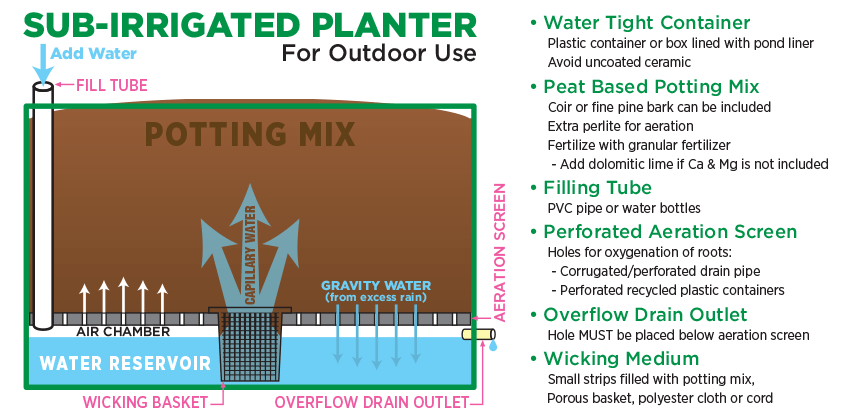
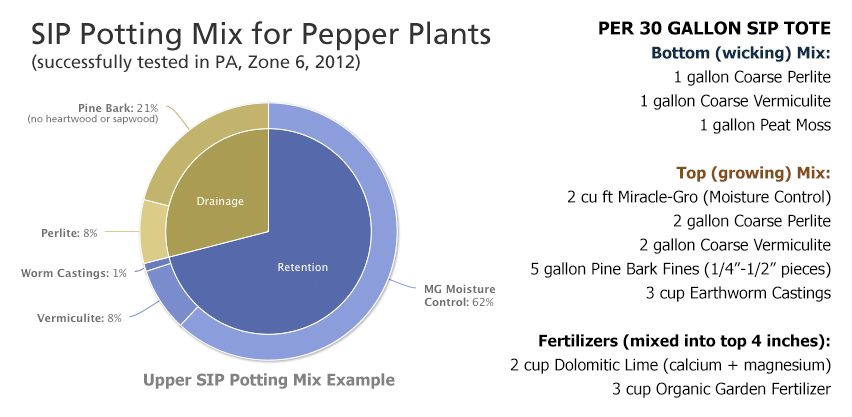
Next step: Install the subirrigation system, which uses a pond liner, perforated tubing to hold a water reservoir, and a special potting mix to wick water up to the roots. What’s all that nonsense you ask? Check out this video and blog, the author has been great about answering my emails and questions so I’ll post about that soon.
I’ve already started the seeds and getting sproutlings to put into these amazing beds, here’s a preview for a future post!
Germinating seeds under saran wrap, covered and with warming mat


 The Inspired Dr.Mom